
To xeriscape a front yard, take out the lawn, correct the grade, switch the irrigation to drip, and then plant grasses, shrubs, and perennials that live on little water. The order matters more than the plant list.
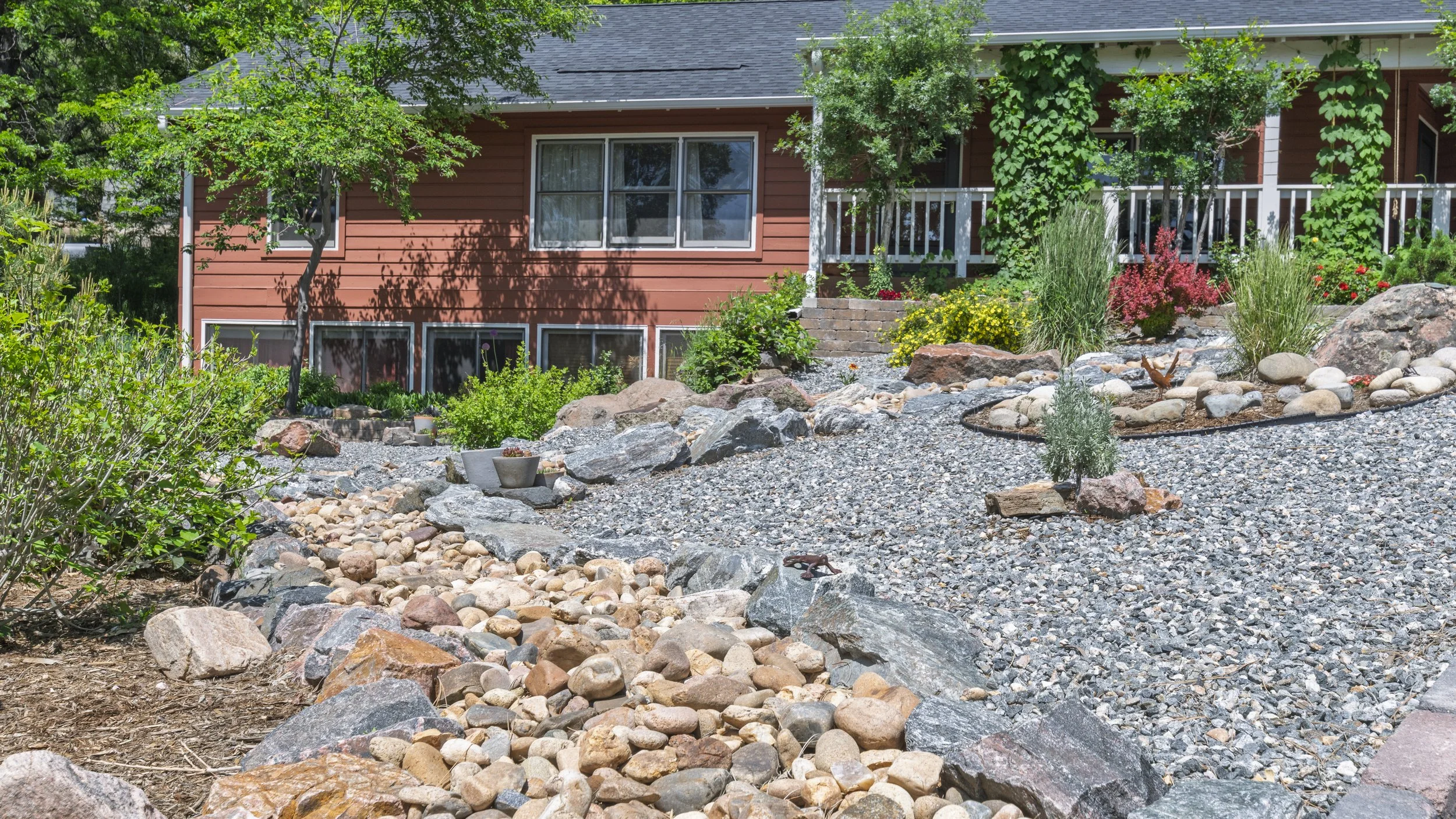
On a front yard we rebuilt in Golden in 2023, the crew spent a full day grading and adding new soil before any rock went down. Highlands Landscaping & Fencing drew that yard on paper first, with a full plant list.
What Should You Know Before Pulling Out the Front Lawn?
Grade the yard before adding rock, because rock laid over a bad slope still sends water toward the house.
Trees that drank from the lawn sprinklers still need water after the lawn is gone.
Ornamental grasses and evergreens keep a xeriscape looking full through winter.
The local turf removal help is an upfront discount through Resource Central, not a rebate, and the 2026 round is fully allocated.
Everything except planting can be built over the winter.
What Do You Do With the Lawn First?
The lawn comes out first, and the ground under it gets regraded before any rock or plants go down. Denver Water publishes a free do-it-yourself landscape guide that walks through turf removal, soil, and plant choices if you want to compare removal methods.
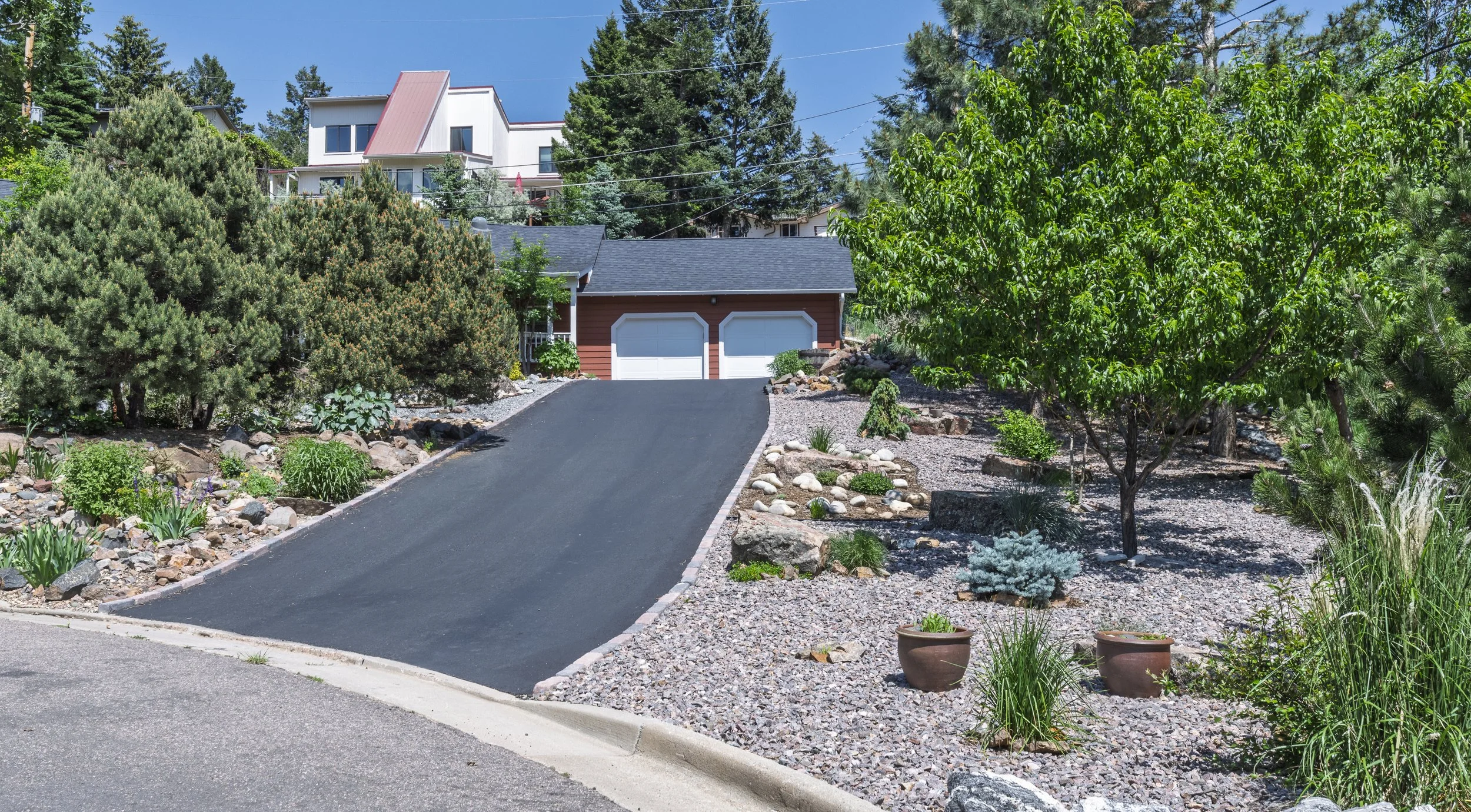
Grading is easy to underestimate. Once the turf is gone, the shape of the ground decides where water goes, and rock and mulch will not change that.
If water already pools against the foundation, xeriscaping alone will not fix it. A yard that slopes toward the house keeps sending water there with rock on top. On the Golden job, the grade was corrected and new fill was compacted before the weed barrier and rock went in.
How Do You Keep a Xeriscaped Front Yard From Looking Like a Rock Lot?
Plants with structure in every season keep a xeriscape from looking like a rock lot, and ornamental grasses do most of that work. Our lead estimator and designer points to grasses, evergreens, and a few shrubs with interesting bark or branching as what keeps beds full from fall through winter.
Grasses she recommends for color after the first freeze:
Little bluestem. A native grass that turns red in fall, which she calls "a true native winner."
Shenandoah switchgrass. It turns a vibrant red, then a deep maroon as the weather cools.
Grama grass. Its seed heads look like eyelashes and turn a golden buff color.
Maiden grass. On a bigger bed, its fan shape gives shrubs and perennials something to stand in front of.
She recommends planting grasses in masses so they read as one drift of texture. Lower ninebark or red twig dogwood in front of them makes the branches stand out once the leaves drop. Grasses also grow fast enough to screen a utility box or a bare stretch of foundation wall.
Her pairings for the perennials that fill in around the grasses:
Switchgrass with an open seed head: blanketflower, cranesbill, asters.
Little bluestem or grama grass: coneflower, hyssop, rudbeckia, salvia.
Karl Foerster feather reed grass: Russian sage, penstemon, coreopsis.
The Golden yard used the same idea. Dwarf pines and spruce gave it evergreen structure, little bluestem, prairie dropseed, and feather reed grass gave it movement, and the ground plane mixed two kinds of granite, a dry creek bed of local cobble, moss rock boulders, and cedar mulch so no single bed read as gravel.
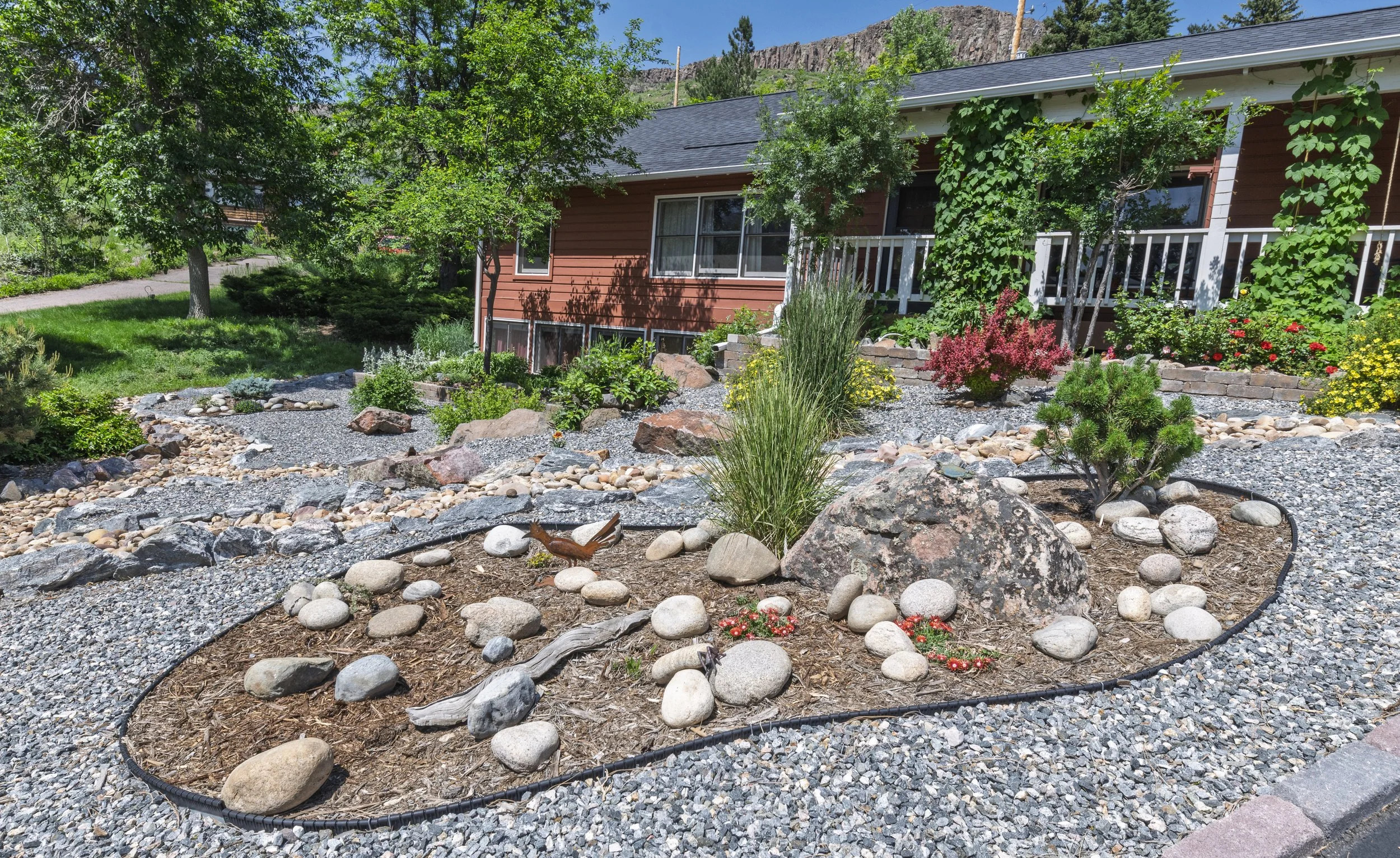
Leaving grasses and perennials standing through winter also gives birds seed to eat and helps the beds hold moisture, according to our designer. When the grasses get cut back in late winter, she recommends pulling the old stems out of the center as well. Otherwise new growth fills in only around the edges, a pattern she calls "the ring of fire."
What Happens to the Sprinkler System?
The lawn sprinklers get capped or replaced, and the beds switch to drip, which puts water at the base of each plant instead of spraying it across the rock. On the Golden yard, the new drip irrigation zone got its own valve box, valve, and pressure reducer, with drip main line run out to the beds and a Wi-Fi controller to run it.
Trees need a plan of their own. A tree that grew up in a lawn has been drinking from the lawn sprinklers the whole time. The same water utility guide says to keep watering young and mature trees during drought, since a tree can be damaged before it shows stress. Each tree needs its own drip line before the old zone is shut off.
Does Denver Water Help Pay for It?
Denver Water does not offer a rebate for removing a lawn, but it has offered an upfront discount on turf removal through the nonprofit Resource Central. The 2026 discounts have all been allocated, and Resource Central is no longer taking 2026 applications, according to the utility's turfgrass removal page.
The utility says program timing can change from year to year. Its current outdoor rebate pays back part of the cost of high-efficiency sprinkler nozzles, which only helps if you keep a patch of lawn.
What Can Be Built This Winter, and What Waits for Spring?
Everything except planting can be built over the winter. That includes lawn removal, grading, drip lines, rock, boulders, and edging. Cold snaps and frozen ground can pause work for a stretch, and the plants go in once spring arrives.
A front yard built over the winter is graded, piped, and covered with rock and mulch by spring. Planting becomes the last step of the job instead of the first thing on a waiting list.
Why Does Highlands Know Front Yard Xeriscapes?
Highlands has designed and built yards in this area since 2011, and a native plant specialist is on staff. Our team includes a QWEL-certified designer, and we are a Plant Select member. Highlands is also nominated for Xeriscaping & Drought Tolerant Landscaping in The Denver Post's Best of the Front Range 2026.
Which of Our Services Cover a Front Yard Conversion?
Our xeriscaping work covers the design, the native plants, the rock, and the mulch. The drip zone and the grading are part of the same job, and our landscaping for Denver homes page shows the rest of what we build in the city.
What Else Do Homeowners Ask About Front Yard Xeriscaping?
Is a Xeriscaped Front Yard Maintenance-Free?
No, but it needs less upkeep than a lawn. Our designer says to cut ornamental grasses down to 4 inches above the soil by the end of March. Mulch needs topping off as it breaks down, and weeds still need pulling from rock and mulch beds, even over weed barrier.
Does a Xeriscape Still Need Water?
Yes. Drought-tolerant plants still need regular water until their roots establish, and trees need water through dry spells. Supporters of xeriscaping say it can cut water use by 50 or 75 percent, according to National Geographic.
Will the Turf Removal Discount Come Back in 2027?
That has not been announced. Availability changes from year to year, and any future discount will be posted on the utility's turfgrass removal page. Check it before you plan your budget.
Want Us to Look at Your Front Yard?
If you're done mowing a lawn nobody uses, reach out through our contact page or call 720-884-6378, and we'll talk through what your front yard needs.
