
Colorado winter evenings can make familiar routes difficult to navigate. Darkness arrives early, snow changes the shape of walkway edges, and patches of ice may blend into surrounding surfaces. Steps and garden borders become harder to distinguish. Winter-safe movement also depends on clear sightlines and a lighting pattern that remains useful when snowbanks alter the appearance of a yard. One bright light near the house rarely solves every visibility problem.
Outdoor pathway lighting helps by placing illumination along the routes people actually use. Carefully positioned fixtures clarify elevation changes and movement between entrances and patios. Lighting does not remove snow or prevent ice, but it makes important features easier to see throughout the colder months.
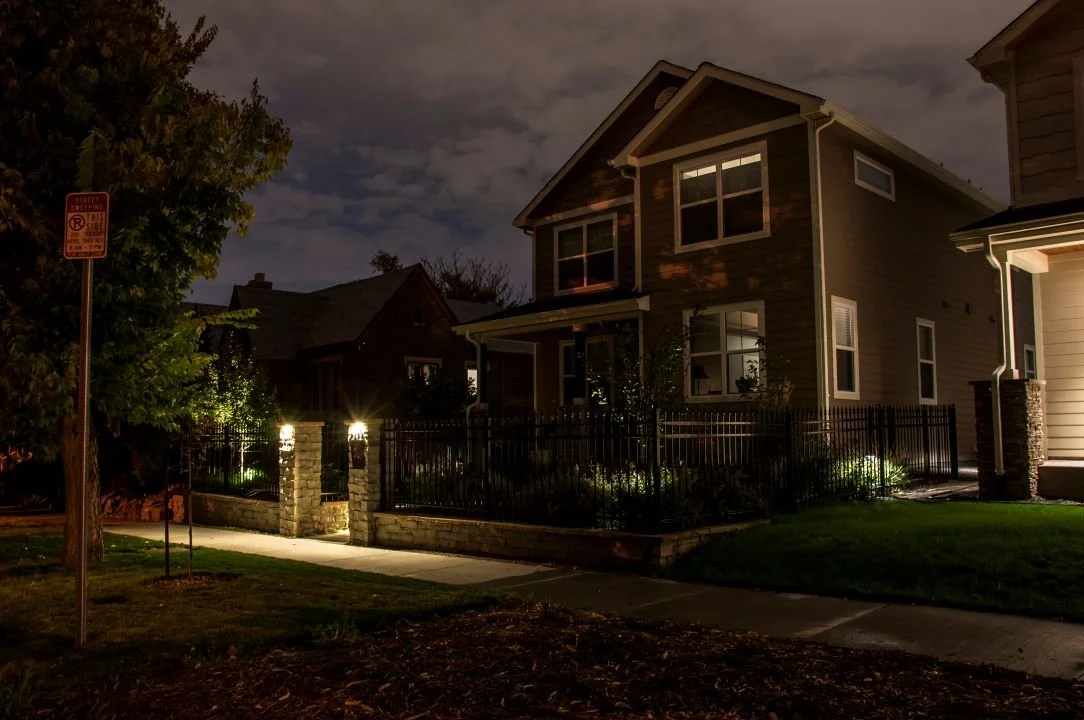
Focus Light Where People Walk and Change Levels
Pathway lighting guides movement between entrances, gates, patios, and walkways. Rather than flooding the entire yard with brightness, fixtures can mark the edges of a path and draw attention to places where someone needs to change direction or step up.
Priority areas often include:
Walkway curves. Clarify the direction of travel when snow blurs the edges
Steps. Highlight elevation changes that can be difficult to judge after dark
Entrances. Improve visibility where people pause, turn, or carry belongings
Patio transitions. Distinguish paved surfaces from planting beds and nearby borders.
Snow may partly cover a walkway or make the ground appear uniformly white. Lighting helps reveal the intended route, but regular snow and ice removal remains essential. Planning should reflect actual use, not photographs.
Choose a Balanced Mix of Path and Cap Lights
Path lights provide gentle, downward-focused illumination along outdoor routes. Cap lights can define steps, wall caps, or raised edges, while carefully positioned accent lights may clarify surrounding features. Their spacing and direction matter more than quantity.
Bright snow can reflect light and increase glare. An intensely illuminated patch beside a dark step may actually make it harder to judge the transition. A balanced design spreads useful light where needed and avoids shining fixtures directly into people's eyes or nearby windows.
A comparison of pathway lighting options explains how cap lights, spotlights, and path lights contribute differently to outdoor visibility and atmosphere. The right combination avoids overlighting.
Account for Snow, Ice, and Changing Conditions
Winter conditions change quickly. A light positioned well in summer may be obscured by a snowbank, buried under accumulated snow, or hidden by dormant plant growth and seasonal debris. Drainage and grading also affect where meltwater may refreeze along a walking route.
A winter-aware lighting review considers:
Fixture location. Avoids spots where routine snow accumulation regularly blocks illumination
Visibility angles. Keeps light directed toward walking surfaces rather than toward faces
Weather exposure. Uses suitable outdoor fixtures and protected installation details
Surrounding grades. Identifies areas where water may pool and freeze near walkways
Lighting cannot identify all ice or guarantee safe footing. Maintaining accessible walkways and addressing drainage concerns remain separate responsibilities. Lighting is one part of winter-access planning.
Avoid Common Lighting Mistakes Without Professional Planning
Lighting problems are often caused by focusing on the fixtures instead of the whole property. A single powerful spotlight may produce glare and deep shadows. Closely spaced path lights may make a narrow walkway look cluttered, while poorly directed beams can illuminate shrubs more strongly than the steps beside them.
Frequent design mistakes include:
Uneven spacing. Creates alternating bright and dark sections along a path
Excessive brightness. Reflects off snow and makes nearby surfaces harder to read
Poor positioning. Places fixtures where snow cover or foot traffic can interfere
Disconnected planning. Ignores steps, drainage, entrances, and the overall walking route
The difference between decorative lighting and useful guidance is coordination. An isolated fixture may enhance a tree while leaving a nearby turn difficult to see. Professional planning evaluates sightlines, mounting positions, and the surrounding hardscape. This helps the system remain practical when winter changes the yard's appearance.
Make Winter Routes Inviting Without Overlighting
Pathway lighting should improve everyday movement while preserving the character of the landscape. Warm, restrained illumination can make an entrance feel welcoming, while uplights on selected trees or stonework can provide visual depth beyond the path. Accent features should not compete with walkway visibility.
A thoughtful design also considers how outdoor living areas connect to the house. A short route to a patio may need more careful guidance than a decorative garden border. The article on backyard enjoyment after dark describes how lighting supports movement and comfort beyond daylight hours.
The goal is consistent visibility, not constant brightness. A balanced layout keeps the backyard comfortable without commercial-level brightness.
Frequently Asked Questions
Does pathway lighting prevent slips on icy walkways?
No. Lighting can make edges, steps, and some surface changes easier to see, but it cannot melt snow, remove ice, or guarantee safety. Snow clearing, appropriate surface care, and attention to drainage remain important.
Are path lights useful when there is snow on the ground?
Yes, if their placement allows light to reach the route rather than being blocked by accumulated snow. Snow can also reflect brightness, so fixture direction and glare control should be part of winter lighting plans.
Where should lighting be prioritized first?
Start with regularly used entrances, steps, pathway bends, and transitions between paved areas. These locations affect navigation more directly than purely decorative sections of the yard. A site evaluation helps establish the right order.
What is the difference between path lights and cap lights?
Path lights illuminate routes from beside the walking surface. Cap lights are typically integrated with caps on walls, pillars, or steps. They can complement each other when the layout requires both route guidance and clearer elevation changes.
Is professional planning necessary for a small walkway?
Even a short route can have awkward steps, drainage concerns, or glare from nearby windows. Professional planning helps match fixture type, spacing, and placement to the property's conditions without adding unnecessary lighting.
Better Visibility for Colorado's Darker Months
Outdoor pathway lighting can make winter movement more comfortable by clarifying routes, highlighting transitions, and reducing avoidable glare. Combined with proper pathway maintenance, it supports a more functional landscape long after sunset.
Light the Way Through Winter
Contact Highlands Landscaping to explore pathway lighting designed around your property's walkways, steps, and evening use.
