
How Drainage Solutions Protect Landscapes From Erosion
Erosion can weaken a landscape long before major damage is visible. Water that moves too quickly across a yard can wash away soil, expose roots, damage planting beds, and undermine patios or walkways. Sloped areas, compacted soil, and poor grading often make the problem worse during heavy rain or snowmelt. Without proper planning, small runoff issues can become costly landscape repairs.
A well-designed drainage solution helps control where water goes, how quickly it moves, and how safely it leaves the property. By managing runoff before it causes damage, drainage planning protects the structure, health, and long-term value of outdoor spaces.
Why Drainage Planning Matters for Erosion Control
Clear answer: A drainage solution protects landscapes from erosion by directing water away from vulnerable soil, plantings, and hardscape areas.
Water always follows the easiest path. If that path runs across bare soil, planting beds, slopes, or patio edges, it can gradually remove the material that keeps the landscape stable.
Important erosion-control benefits include:
Soil protection. Reduces washout around lawns, beds, and sloped areas
Root support. Helps keep plant roots covered, stable, and healthier
Hardscape protection. Limits water damage near patios, walkways, and walls
Water direction. Moves runoff toward safer areas instead of weak spots
Drainage should be part of the full landscape plan, not a one-time correction after damage appears. When water movement is understood early, the entire property becomes easier to protect.
For related planning insight, this article on long-term value explains how outdoor improvements can support durability and function over time.
How Grading and French Drains Manage Runoff
Clear answer: Grading and French drains manage runoff by correcting water flow above and below the surface.
Grading shapes the land so water moves away from structures, planting beds, and low areas. Even slight adjustments can make a major difference in how water travels across a yard. Poor grading can trap water near foundations, patios, or lawn areas, while proper grading creates a more reliable path for runoff.
French drains support subsurface water management. They are designed to collect and redirect water below ground, helping prevent soil saturation and repeated pooling. This is useful where water tends to settle or where the landscape needs hidden drainage support.
Together, grading and French drains help protect the surface and the soil below it. A drainage solution should match the property’s slope, soil type, and existing landscape features rather than relying on a generic approach.
Common Landscape Fails Without Professional Drainage Planning
Clear answer: Without professional drainage planning, landscapes can develop erosion, unstable surfaces, plant decline, and repeated maintenance problems.
Many drainage problems start with small oversights. A patio may be installed without enough slope. A planting bed may sit in a runoff path. Soil may be compacted in areas where water needs to absorb more effectively.
Common issues include:
Poor grading. Sends water toward structures, beds, or hardscape edges
Blocked flow. Causes water to collect behind borders, walls, or raised areas
Weak soil support. Allows runoff to remove soil around roots and slopes
Disconnected planning. Treats drainage separately from the full landscape layout
The difference is clear. A quick fix may move water away from one spot but create a new problem elsewhere. A professionally planned drainage solution looks at the full property, including slope, access, plantings, hardscaping, and long-term maintenance.
This broader view helps prevent repeated repairs and supports a more stable outdoor environment.
Catch Basins and Rock Swales in Landscape Protection
Clear answer: Catch basins and rock swales help manage surface water by collecting, slowing, and redirecting runoff.
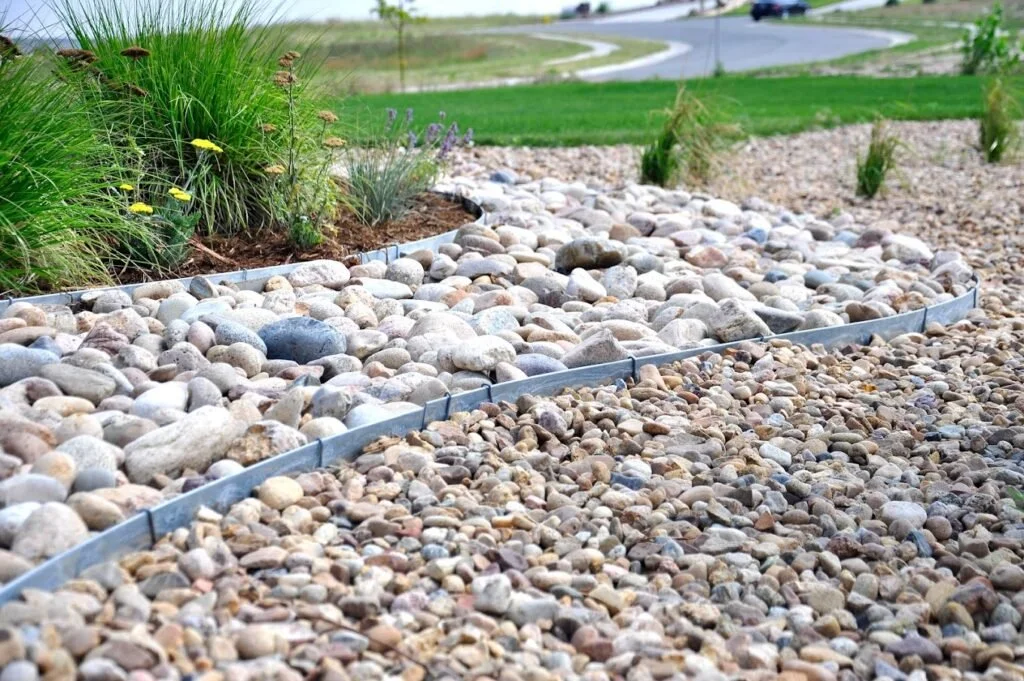
Some properties need visible drainage features that work with the landscape design. Catch basins can collect surface water in low areas and direct it into an appropriate drainage path. Rock swales help guide water across the yard while slowing its movement and reducing erosion pressure.
These features need careful placement. If installed in the wrong location, they may not collect enough water or may direct runoff toward another vulnerable area. Effective drainage planning considers elevation, water volume, soil behavior, and surrounding landscape features.
Preparing the Yard Before Drainage Work Begins
Clear answer: Yard preparation helps a drainage solution perform better by giving crews clear access and allowing site conditions to be evaluated properly.
Before drainage work begins, the property should be reviewed for obstacles, existing features, and areas where runoff is already causing visible damage.
Helpful preparation steps include:
Access review. Identifies how equipment and materials can reach the work area
Problem areas. Notes pooling water, washed soil, and soggy lawn sections
Existing features. Accounts for patios, fences, planting beds, and irrigation
Soil conditions. Helps determine whether grading or subsurface drainage is needed
Preparation also helps avoid delays. A drainage project may involve digging, grading, stone placement, or connections between different yard areas. Clear access and accurate site review allow the work to move with better coordination.
For a closer look at preparing outdoor spaces before installation, this guide on yard preparation explains why early site readiness matters.
FAQ Section
How does drainage prevent erosion?
Drainage controls runoff so water does not wash soil away from lawns, slopes, planting beds, patios, or walkways.
What is the best drainage solution for a yard?
The right option depends on grading, soil conditions, water volume, and where runoff collects. French drains, grading, rock swales, and catch basins may all be considered.
Can poor drainage damage plants?
Yes. Excess water can expose roots, compact soil, encourage erosion, and reduce healthy plant growth over time.
Why does water pool in the same area?
Pooling often happens because of low spots, compacted soil, poor grading, or blocked water flow.
Should drainage be planned before landscaping?
Yes. Drainage should be considered early so patios, walkways, planting beds, and irrigation systems work with the property’s water flow.
Where Water Control Builds Stronger Landscapes
A drainage solution protects landscapes by controlling runoff, reducing erosion, supporting healthier plants, and preserving hardscape areas. When drainage is planned with grading, soil, planting, and outdoor use in mind, the landscape becomes more stable and easier to maintain.
Protect Your Landscape From the Ground Up
For professionally planned and expertly installed drainage solutions, contact Highlands Landscaping to create an outdoor space designed for long-term stability, healthier soil, and lasting landscape performance.
