
How Xeriscaping Helps Colorado Yards Survive Summer Heat
Colorado summers can be difficult on traditional yards. Strong sun, dry air, limited rainfall, and watering restrictions can leave lawns stressed, planting beds uneven, and outdoor spaces harder to maintain. When a landscape depends too heavily on high-water grass or plants that do not fit the climate, summer heat can quickly reveal weak spots.
The xeriscaping method offers a more resilient approach. It uses drought-tolerant planting, efficient irrigation, mulch, rock, artificial turf, and hardscape elements to reduce water demand while keeping the yard attractive and functional. With thoughtful planning, Colorado properties can stay polished through hot weather without relying on constant watering or repeated one-time fixes.
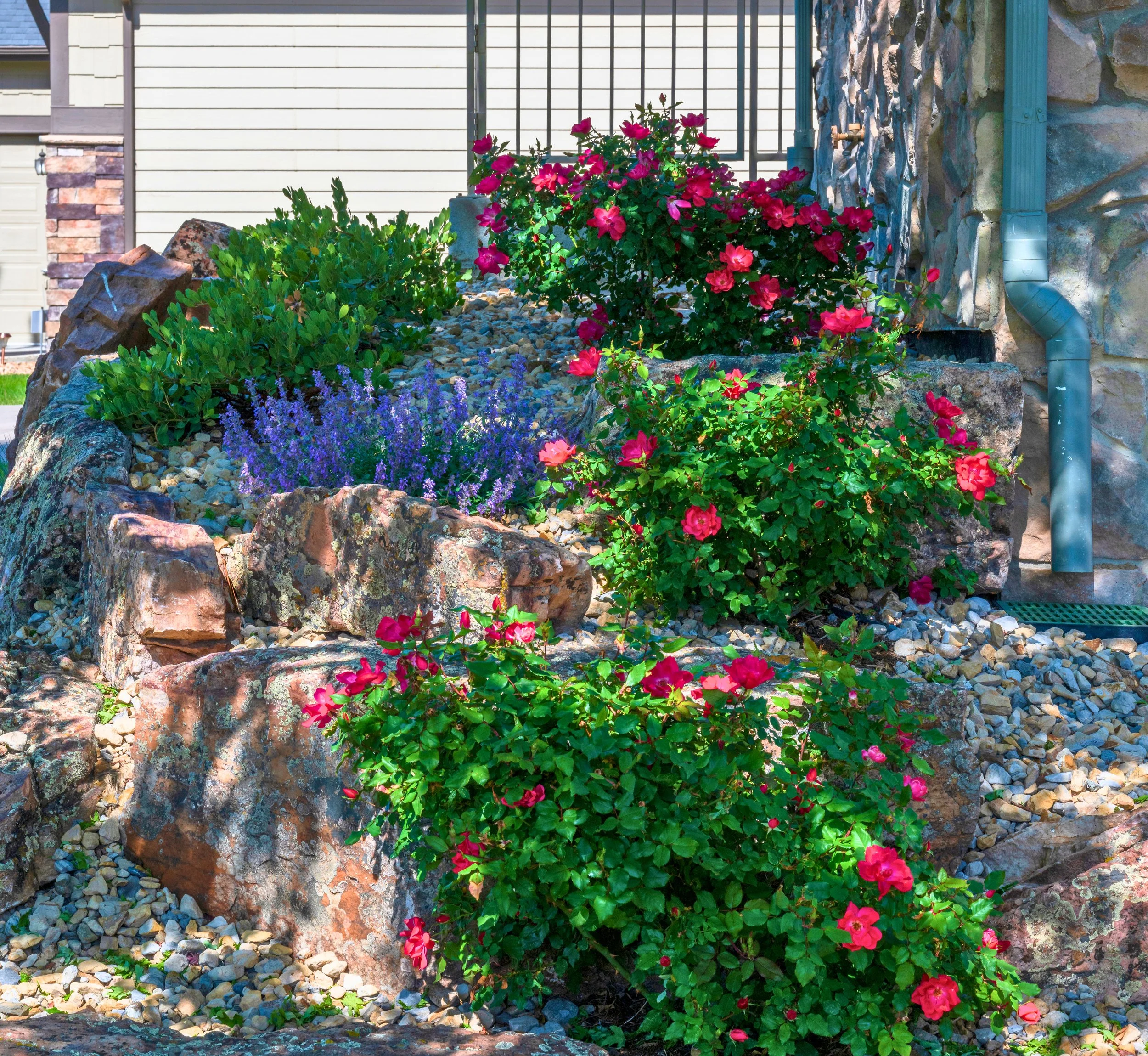
Climate-Smart Design Supports Heat Resilience
Clear answer: The xeriscaping method helps Colorado yards survive summer heat by designing the landscape around dry conditions from the beginning.
A successful xeriscape is not simply a yard with less grass. It is a complete design approach that considers sun exposure, soil, slope, water needs, and the way the outdoor space will be used.
Important design elements include:
Native plants. Support healthier growth in Colorado’s dry climate
Artificial turf. Reduces high-water lawn areas while preserving green space
Rock and mulch. Protect soil moisture and create a cleaner landscape finish
Hardscape areas. Add durable surfaces that reduce maintenance demands.
The result is a yard that can handle heat with greater consistency. Instead of reacting to summer stress after plants decline, the design prepares the landscape to perform better before the hottest months arrive.
Efficient Irrigation Protects Plants Without Waste
Clear answer: Efficient irrigation helps xeriscaped yards stay healthy by delivering water where it is needed most.
Even a low-water landscape still needs a smart watering strategy, especially during establishment. The difference is that water is used with more precision. Sprinklers may support limited lawn areas, while drip line and planter-box irrigation can send water directly to plant roots.
This approach helps reduce overspray, runoff, and uneven watering. A plant that receives targeted moisture is more likely to develop strong roots and tolerate heat. A yard that relies on broad, uncontrolled watering may waste water while still leaving some areas dry.
For property owners who want to understand how careful planning shapes a project, this guide on design project stages explains how a professional process organizes site conditions before installation begins.
Soil, Mulch, and Plant Placement Improve Performance
Clear answer: Healthy soil, proper mulch, and strategic plant placement help xeriscaping perform better during long, hot summer periods.
The surface of the yard matters, but the conditions below it are just as important. Soil that drains too quickly may not hold enough moisture for plant roots. Soil that stays compacted can limit root growth and reduce plant health. The xeriscaping method works best when the soil is prepared to support the selected plants.
Mulch and rock also play important roles. Mulch can reduce evaporation around planting beds, while rock can define low-water areas and protect exposed ground. Plant placement should group similar water needs together so irrigation can be managed more accurately.
A well-planned layout keeps the landscape organized. It also makes the yard look intentional rather than sparse, which helps preserve curb appeal while reducing summer water use.
Common Xeriscaping Mistakes Without Professional Planning
Clear answer: Without professional planning, xeriscaping can become inefficient, unfinished-looking, or harder to maintain than expected.
Many problems happen when water reduction is treated as simple removal. Taking out grass without a full plan may leave large bare areas. Adding rock without enough planting can create a harsh appearance. Installing plants without understanding irrigation zones can lead to weak growth.
Common mistakes include:
Poor plant selection. Uses plants that struggle with heat or soil conditions
Weak irrigation zoning. Overwaters some areas while neglecting others
Too much rock. Creates a flat look without enough texture or seasonal interest
Incomplete grading. Allows runoff, erosion, or water collection in low areas
The difference is clear. A quick reduction in lawn may lower water use briefly, but it can also reduce function and visual balance. A professionally planned xeriscape considers the whole property, including irrigation, grading, soil, planting, mulch, rock, and hardscape features.
Long-Term Value Comes From Balanced Outdoor Planning
Clear answer: Xeriscaping adds long-term value when it balances water efficiency, outdoor comfort, and visual appeal.
A strong xeriscape should not feel like a compromise. It can support walkways, seating areas, planting beds, turf sections, and low-maintenance hardscape zones while lowering water demand. The design should make the yard easier to enjoy, not simply easier to ignore.
Long-term benefits include:
Lower water demand. Reduces the strain of summer watering needs
Better heat tolerance. Helps the yard stay healthier through dry periods
Reduced maintenance. Limits mowing, overwatering, and repeated replacements
Stronger curb appeal. Creates a clean, structured, climate-ready landscape
For additional ideas on outdoor improvements that hold value over time, this article on summer outdoor projects offers helpful context for planning seasonal upgrades.
FAQ Section
Is xeriscaping only for dry or rocky yards?
No. Xeriscaping can include native plants, artificial turf, rock, mulch, irrigation, and hardscape elements arranged to create a balanced, attractive yard.
Does xeriscaping remove the need for irrigation?
Not always. Most xeriscaped yards still need irrigation during establishment and dry periods, but the system is designed to use water more efficiently.
Can xeriscaping improve curb appeal?
Yes. A well-designed xeriscape can look clean, colorful, and structured while reducing the water demand of the property.
What makes xeriscaping practical for Colorado?
Colorado’s dry climate pairs well with drought-tolerant plants, efficient irrigation, mulch, rock, artificial turf, and low-water design principles.
Why is planning important before xeriscaping?
Planning helps match plants, irrigation, soil conditions, grading, and hardscape features so the yard performs better over time.
Where Heat-Ready Design Supports Lasting Beauty
The xeriscaping method helps Colorado yards survive summer heat by reducing water demand, strengthening plant performance, and creating a more resilient outdoor layout. When the design balances irrigation, soil, planting, rock, mulch, turf, and hardscape elements, the yard becomes easier to maintain and more reliable through hot weather.
Create A Yard Built For Colorado Summers
For professionally planned and expertly executed xeriscaping solutions, contact Highlands Landscaping to create an outdoor space designed for long-term beauty, lower water use, and stronger summer performance.
