
Why Retaining Walls Matter On Sloped Colorado Properties
Sloped Colorado properties often come with beautiful views, but they can also create serious landscape challenges. Soil can shift downhill, water can move quickly across the yard, and outdoor areas may become difficult to use safely. Over time, erosion, uneven ground, and drainage pressure can affect planting beds, patios, walkways, and nearby structures.
Retaining walls provide a structured way to manage those conditions. They hold soil in place, guide the shape of the landscape, and help transform steep sections into more usable outdoor areas. When planned carefully, retaining walls support both day-to-day function and long-term property value.
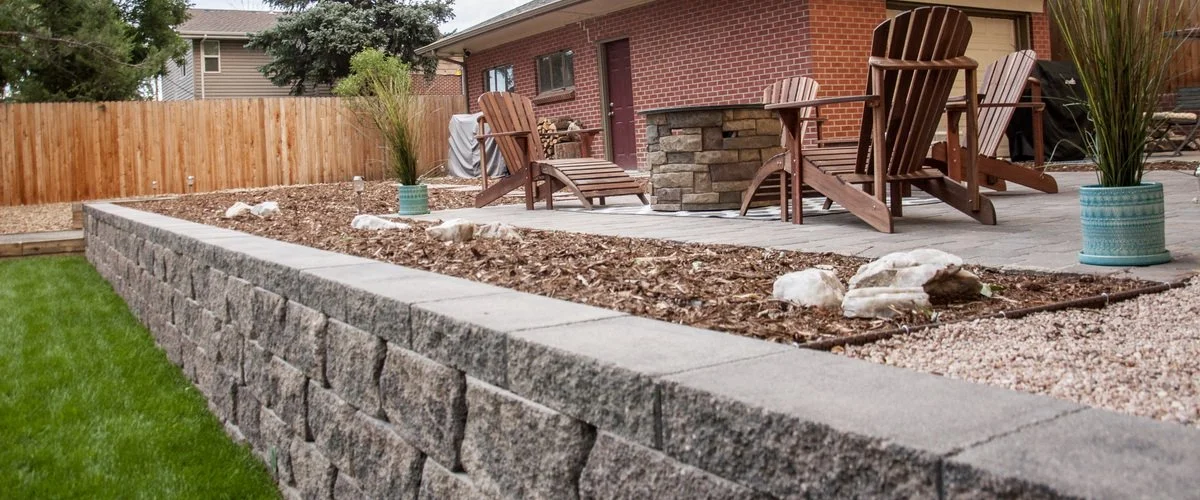
Stabilizing Soil and Reducing Erosion
Clear answer: Retaining walls matter because they help stabilize sloped ground and reduce soil movement caused by runoff, gravity, and seasonal weather.
On a sloped property, soil is constantly affected by water and elevation. Heavy rain, melting snow, and compacted soil can cause gradual erosion that becomes more visible each year. A properly planned wall helps resist that movement by creating a reinforced edge where the land needs support.
Important stability benefits include:
Soil retention. Helps keep loose soil from washing or sliding downhill
Erosion control. Reduces damage caused by fast-moving runoff
Slope support. Adds structure to areas that are difficult to maintain
Drainage guidance. Helps direct water away from weak or exposed areas
A retaining wall should not be treated as a surface-level feature only. It must work with the soil, grading, drainage, and layout of the property. This is why planning matters on Colorado slopes, where weather and elevation can place extra pressure on outdoor spaces.
Turning Slopes Into Usable Outdoor Space
Clear answer: Retaining walls can turn steep or uneven land into outdoor areas that are easier to access, maintain, and enjoy.
Many sloped yards have space that looks available but cannot be used comfortably. A hillside may be too steep for seating, too uneven for planting, or too exposed for daily outdoor living. Retaining walls help create level sections that make the property more functional.
These level areas can support patios, paver walkways, planting beds, fire-feature zones, pergola areas, or garden spaces. The goal is not simply to flatten the yard. It is to create a more organized landscape that uses elevation with purpose.
For related upgrade ideas, this article on summer landscape upgrades explains how outdoor improvements can create better comfort, flow, and long-term value.
When retaining walls are integrated with the larger landscape, they help connect outdoor zones rather than separating them.
Improving Drainage and Protecting Nearby Features
Clear answer: Retaining walls help protect sloped properties by supporting better drainage and reducing water-related damage.
Water management is one of the most important parts of building on a slope. If runoff is not guided correctly, it can collect behind walls, wash out planting beds, or create pressure near patios and walkways. A good drainage plan helps the wall perform properly.
Drainage-related advantages include:
Runoff control. Helps water move through the landscape in a safer direction
Bed protection. Reduces washout around planting areas and mulch
Hardscape support. Helps protect pavers, patios, and walkways from shifting
Foundation awareness. Keeps water movement from creating problems near structures
The difference is clear. A wall built without drainage planning may look stable at first, but pressure can build behind it over time. A wall designed with grading and drainage in mind is more likely to perform reliably through heavy rain, snowmelt, and seasonal changes.
Common Landscaping Fails Without Professional Planning
Clear answer: Without professional planning, retaining walls can develop structural, drainage, and design problems that reduce their long-term performance.
Many wall failures begin before installation starts. The issue is often not the idea of adding a wall, but the lack of a complete plan for soil, water, height, materials, and surrounding features.
Common mistakes include:
Poor drainage. Allows water pressure to build behind the wall
Weak base preparation. Leads to settling, shifting, or uneven sections
Incorrect height planning. Creates support problems on steeper slopes
Disconnected layout. Makes the wall feel separate from the rest of the landscape
A quick wall placement may solve one visible problem, but it can create new issues if grading, runoff, and outdoor flow are ignored. A professionally planned retaining wall considers the full property, including access, irrigation, plantings, hardscaping, soil, and long-term maintenance.
Adding Long-Term Value to Sloped Properties
Clear answer: Retaining walls add long-term value by improving stability, usable space, curb appeal, and landscape performance.
A well-designed wall can make a difficult slope feel intentional. It can create structure, define planting areas, frame outdoor living spaces, and help the property feel more polished. It also supports practical maintenance because steep, unstable areas become easier to manage.
Retaining walls are especially valuable when paired with planting, pavers, drainage, and other hardscape features. The result is a yard that feels more complete and easier to use throughout the year.
For more detail on their practical benefits, this guide on sloped property walls explains how walls support stability, drainage, and outdoor function.
FAQ Section
Why are retaining walls important on sloped properties?
They help hold soil in place, reduce erosion, support drainage, and create more usable outdoor areas on uneven land.
Can retaining walls help with drainage?
Yes. When planned correctly, they can help guide water movement and reduce washout around slopes, planting beds, and hardscape areas.
Do retaining walls improve outdoor living?
Yes. They can create level spaces for patios, walkways, planting beds, seating areas, and other outdoor-living features.
What causes retaining walls to fail?
Poor drainage, weak base preparation, incorrect height planning, and unsuitable materials are common causes of long-term problems.
Are retaining walls a good long-term investment?
Yes. They can improve stability, usability, curb appeal, and the overall performance of a sloped landscape.
Where Stronger Slopes Create Better Outdoor Living
Retaining walls matter because they do more than hold back soil. They help protect sloped Colorado properties from erosion, improve drainage, create usable space, and support a more polished outdoor layout. With careful planning, they become a lasting part of a stronger landscape.
Build Stability Into Your Outdoor Space
For professionally planned and expertly installed retaining walls, contact Highlands Landscaping to create an outdoor space designed for long-term strength, better usability, and lasting visual appeal.
